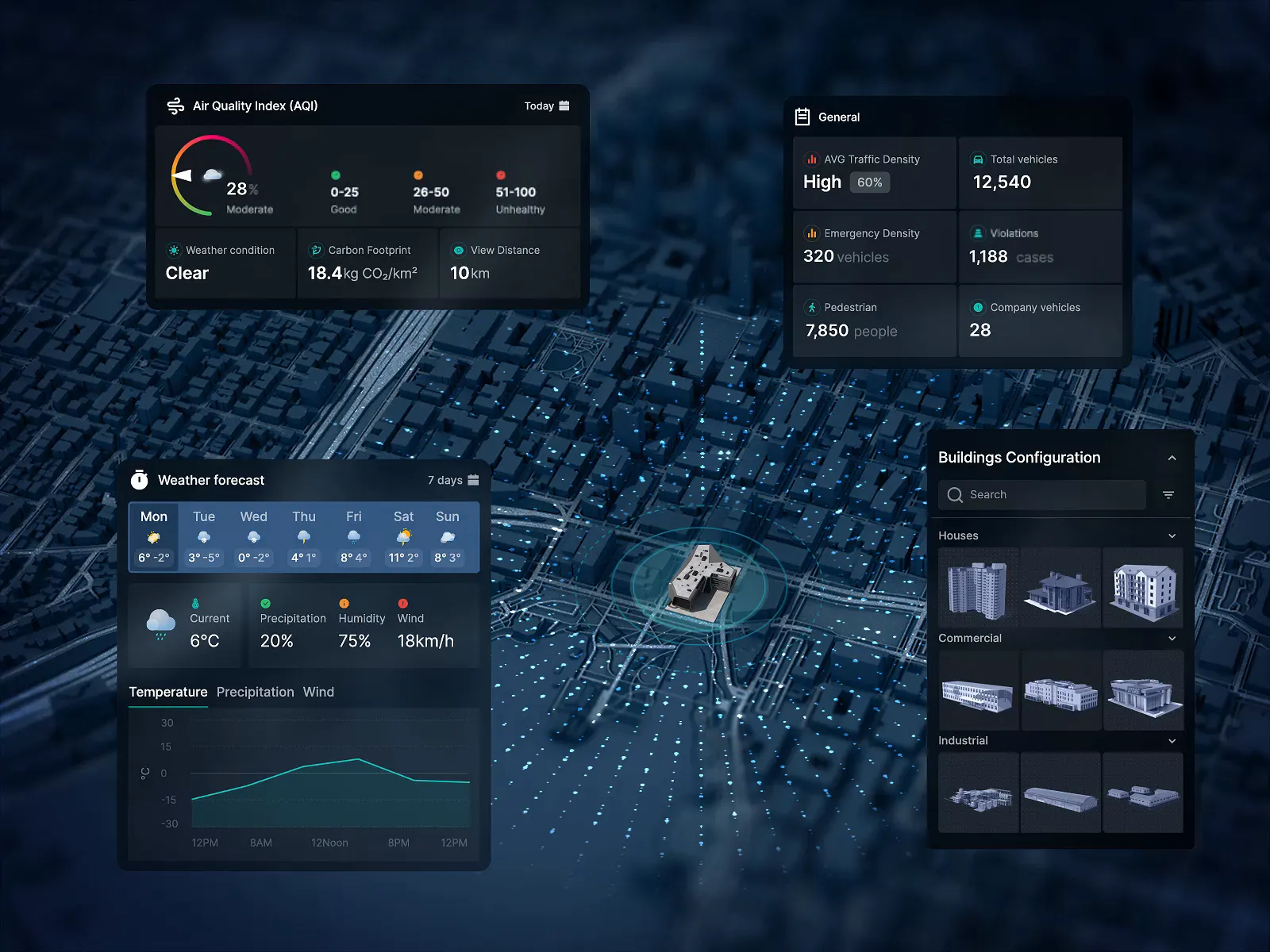
Why Urban Services Integration Is Critical for Business
Urban services integration is a key driver of digital transformation for modern businesses. Companies operating in transportation, payments, IoT, and analytics often face fragmented systems that do not communicate effectively with each other.
This leads to direct financial losses: delayed transactions, data inconsistencies, duplicated processes, and increasing infrastructure costs.
Without proper integration, businesses lose:
- control over data and analytics;
- speed of operations;
- scalability potential;
- revenue due to inefficient processes.
A unified digital platform connects transport systems, payment solutions, IoT devices, and analytics into a single ecosystem, enabling sustainable growth and operational efficiency.
Who Needs Urban Services Integration
- Startups — rapid launch of scalable platforms
- Mid-sized businesses — process optimization and cost reduction
- Enterprise companies — managing complex digital ecosystems
- Global expansion companies — adapting to international standards and scaling
Our Approach: Architecture as the Foundation
Urban services integration is primarily an architectural challenge. Mistakes at this stage lead to costly rework and limited scalability.
- Designing scalable system architecture
- Decoupling systems into independent services
- Reducing risks and technical debt
- Focusing on ROI and total cost of ownership
We build solutions that handle growing loads while enabling fast deployment of new services.
Development and Integration Process
1. Business Analysis
- Defining goals and KPIs
- Analyzing existing systems
- Identifying bottlenecks
2. Architecture Design
- Designing integrations
- Selecting architecture approach
- Planning scalability
3. UX/UI Design
- User journey mapping
- Prototyping
4. Development
- Backend and frontend development
- API integrations
5. Testing
- Functional testing
- Load testing
- Stability validation
6. DevOps
- CI/CD pipelines
- Infrastructure automation
7. Support and Scaling
- Monitoring
- Performance optimization
- System scaling
Why Integration Projects Fail
- Lack of architecture
- Poor analytics
- Wrong vendor selection
- Technical debt
- Missed deadlines
- No DevOps processes
We eliminate these risks through architecture-first development, strong analytics, and automated DevOps practices.
Our Experience
We have delivered dozens of projects in urban services integration, including transport systems, payment platforms, and IoT ecosystems.
- Up to 3x system performance improvement
- Up to 40% infrastructure cost reduction
- Improved system stability
- Readiness for global scaling
Technologies and Business Value
Backend
- Node.js (NestJS) — high performance and fast time-to-market
- Microservices — independent scalability
- REST / GraphQL — flexible integrations
Frontend
- React — reliable UI development
- Next.js — fast performance and SEO optimization
Data
- PostgreSQL — reliable data storage
- Redis — performance acceleration via caching
DevOps & Cloud
- Docker, Kubernetes — scalability and orchestration
- CI/CD — faster and safer releases
- AWS / GCP / Azure — high availability and global reach
What Affects Development Cost
- System complexity
- Number of integrations
- Timeline
- Team size
- Infrastructure requirements
- Scalability needs
Why Choose Us
- Architecture-driven development
- Transparent communication
- Strict deadline control
- Built-in DevOps processes
- Scalable solutions
- International project experience
Let’s Discuss Your Project
Contact us to discuss your urban services integration project. We will analyze your current systems, identify risks, and design a scalable architecture tailored to your business goals.