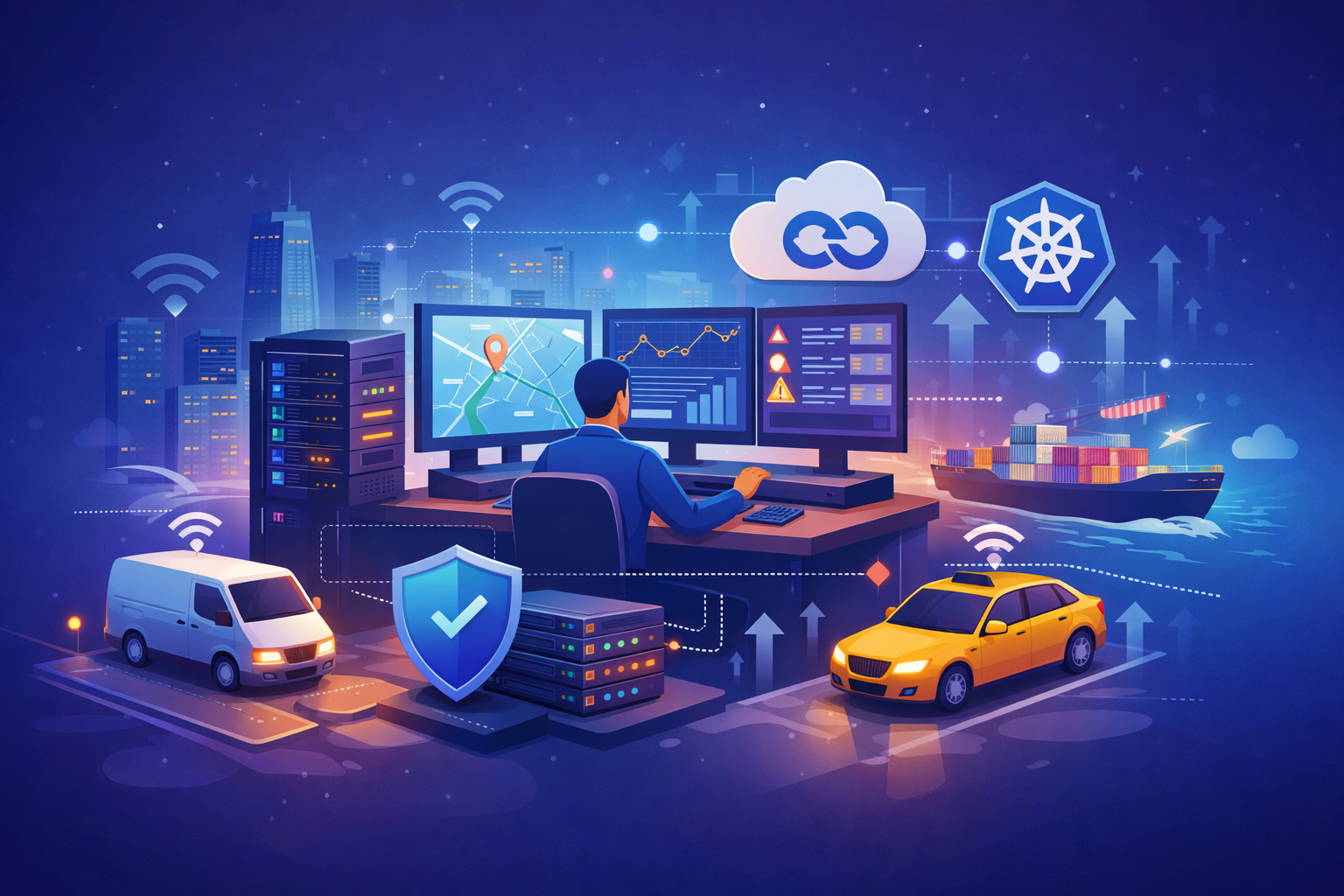
A transport platform is not just a website or a mobile app. It is a critical business system where downtime directly translates into financial losses, operational disruptions, and customer dissatisfaction.
The common mistake is treating such platforms like regular IT products. Everything works fine in testing, but under real-world load the system starts to degrade — delays, errors, and even data loss.
What happens if the platform is not built for 24/7:
- every minute of downtime means lost revenue;
- delivery and logistics disruptions;
- loss of user trust;
- growing maintenance costs;
- limited scalability.
Building a 24/7 transport platform is primarily an architectural challenge, not just development.
Who Needs 24/7 Transport Platforms
- Logistics companies — delivery and route management
- Taxi and mobility services — real-time order processing
- Delivery and e-commerce — synchronization of orders and couriers
- Corporate fleets — vehicle tracking and control
In these scenarios, even a few seconds of delay can impact business performance.
Our Approach to Building Reliable Platforms
We start with load modeling and failure scenarios — identifying where the system might break before it happens in production.
- Design for peak нагрузка, not average
- Build fault tolerance at the architecture level
- Split system into independent services
- Implement full observability (monitoring, logging, alerts)
This ensures the system degrades gracefully instead of failing completely.
Development Stages
1. Load & Scenario Analysis
- peak hours
- user volume
- failure points
2. Architecture
- microservices instead of monolith
- event-driven design
- message queues
3. UX/UI
- minimize user actions
- fast interfaces
4. Development
- domain-driven approach
- API-first
5. Testing
- load testing
- chaos testing
6. DevOps
- automated deployments
- zero-downtime releases
7. Operations
- 24/7 monitoring
- alerting and response
Why Platforms Fail to Run 24/7
- Monolithic architecture — one failure breaks everything
- No caching — database overload
- No queues — system can’t handle spikes
- No monitoring — issues detected too late
- Manual releases — high risk of downtime
Most failures are architectural, not coding issues.
Results in Practice
- 99.9%+ uptime
- stable performance under peak load
- scalable infrastructure
- lower maintenance costs
Technologies That Enable 24/7
Backend
- Node.js (NestJS) — high event processing speed
- Microservices — fault isolation
- REST / GraphQL — integrations
Frontend
- React — fast UI
- Next.js — performance and SEO
Data
- PostgreSQL — transactional reliability
- Redis — caching and speed
DevOps
- Docker — consistent environments
- Kubernetes — auto scaling
- CI/CD — safe releases
Cloud
- AWS / GCP / Azure — reliability and distribution
What Affects Cost
- expected load
- integrations
- uptime requirements
- time to market
- fault tolerance level
Trying to save on architecture usually leads to higher costs later.
Why Choose Us
- we design systems, not just code
- experience with highload systems
- DevOps from day one
- business-focused approach
- scalable solutions
Ready to Launch Without Downtime?
Leave a request — we will analyze your case and design a platform that truly works 24/7.