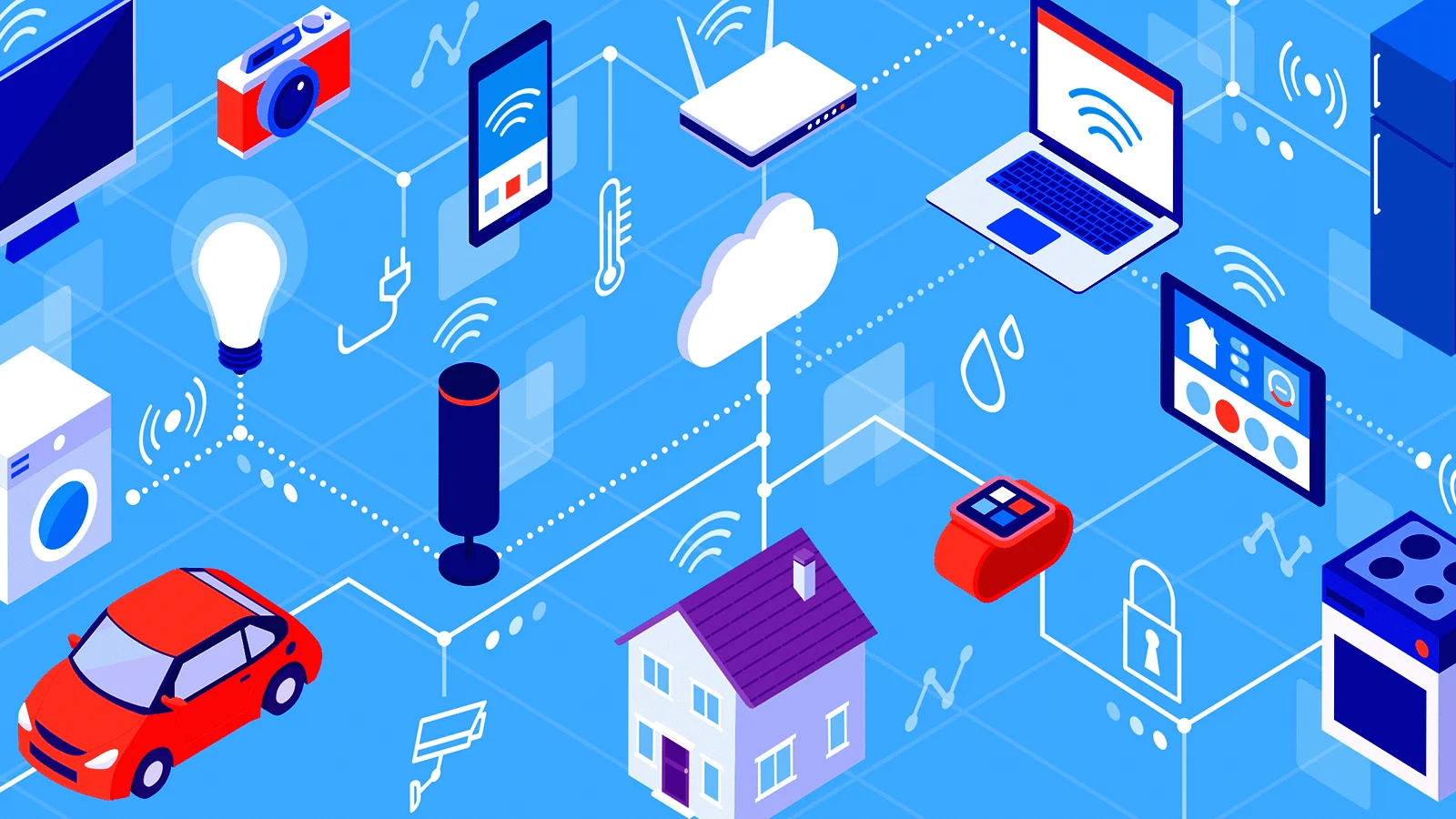
If your system includes hardware, sensors, and software — it doesn’t automatically make it a system. It’s just a collection of disconnected components working independently.
Real value appears only when everything operates as a single unit — synchronized, controlled, and predictable.
What happens without proper integration:
- data is not synchronized;
- devices operate independently;
- logic is duplicated;
- no centralized control;
- the system cannot scale.
Connecting ≠ Integrating
A common mistake is assuming that once devices are connected, the system is complete.
In reality:
- each device uses its own protocol;
- data arrives in different formats;
- logic is scattered across components.
Without architecture, this quickly becomes chaos.
The System Starts with a Data Model
The first step is not connection — it’s standardization.
- unified data structure;
- event normalization;
- consistent processing rules.
This creates the foundation for the entire system.
The Integration Layer
To unify different devices, you need an intermediate layer.
- device adapters;
- APIs for services;
- data transformation.
It isolates complexity and makes the system manageable.
Data Flow
All components must operate through a unified event stream.
- data collection;
- transmission;
- processing;
- reaction.
This turns the system into a living mechanism.
Centralized Control
Without control, scaling is impossible.
- device monitoring;
- configuration management;
- updates;
- state control.
This provides full visibility and governance.
Scalability
Integration must be designed for growth.
- adding new devices;
- connecting new services;
- handling increased load.
Without this, the system quickly breaks under pressure.
Technology Stack
- MQTT / Kafka — event streaming;
- Node.js (NestJS) — backend;
- Microservices — scalability;
- PostgreSQL — data storage;
- Redis — performance;
- Docker / Kubernetes — infrastructure.
Business Impact
- a unified and controllable system;
- data transparency;
- scalability;
- cost reduction.
Integration is not about connection. It’s about building a system.
Need to unify your hardware and software?
We build systems where all components work as one.