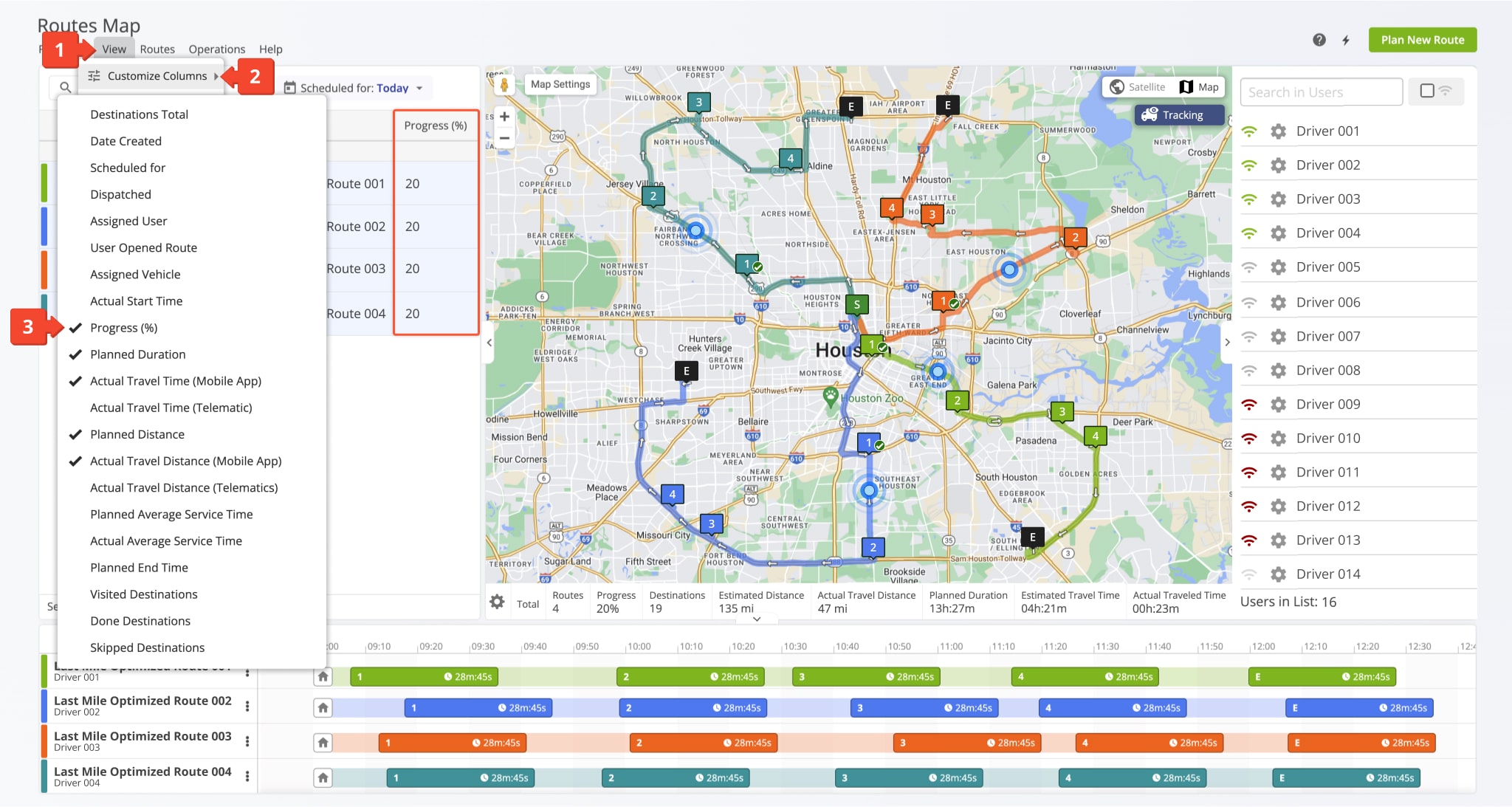
Why Basic GPS Tracking Is No Longer Enough
Most companies start with basic GPS tracking: location monitoring, route history, and vehicle control.
However, as operations scale, this becomes insufficient. Businesses face new challenges:
- real-time decision-making;
- dynamic dispatching;
- route optimization;
- analytics and forecasting;
- integration with ERP and external systems.
At this stage, GPS evolves from a feature into a full-scale logistics management platform.
Who Needs These Systems
- Logistics companies — transportation control and optimization
- Retail & eCommerce — delivery and last-mile logistics
- Industrial enterprises — fleet management
- International companies — distributed operations
System Architecture Overview
Core components:
- Data ingestion (GPS trackers, IoT devices)
- Streaming layer (real-time processing)
- Backend services (business logic)
- Analytics layer (BI, reporting)
- Frontend interfaces (dispatch dashboards)
1. Data Ingestion
The system collects data from GPS devices, mobile applications, and third-party APIs.
2. Streaming Layer
Real-time processing of incoming data: location updates, events, and route deviations.
3. Backend Layer
This layer implements core business logic:
- dispatching;
- task allocation;
- route optimization;
- SLA monitoring.
4. Analytics Layer
- dashboards;
- KPI tracking;
- predictive analytics;
- bottleneck detection.
5. Interfaces
User interfaces for operators, managers, and executives.
Key Risks in System Development
- underestimating system load (thousands of devices);
- data latency issues;
- lack of scalability;
- integration challenges;
- unstable infrastructure.
Architectural mistakes at early stages often lead to complete system redesign.
Our Approach
- high-load architecture from day one;
- event-driven design;
- microservices architecture;
- real-time data processing;
- DevOps integration from the start.
Technologies and Their Role
- Node.js (NestJS) — data stream processing
- Microservices — scalability
- Kafka / streaming — real-time pipelines
- PostgreSQL / Redis — data storage and speed
- Docker / Kubernetes — reliability
- AWS / GCP — cloud scalability
What Affects Development Cost
- number of connected devices;
- system load requirements;
- business logic complexity;
- integration scope;
- real-time processing requirements.
A System Is Not GPS — It Is Architecture
Companies that treat GPS as a tool lose efficiency. Companies that build systems gain control and scalability.
Submit a request — we will design an architecture tailored to your business.