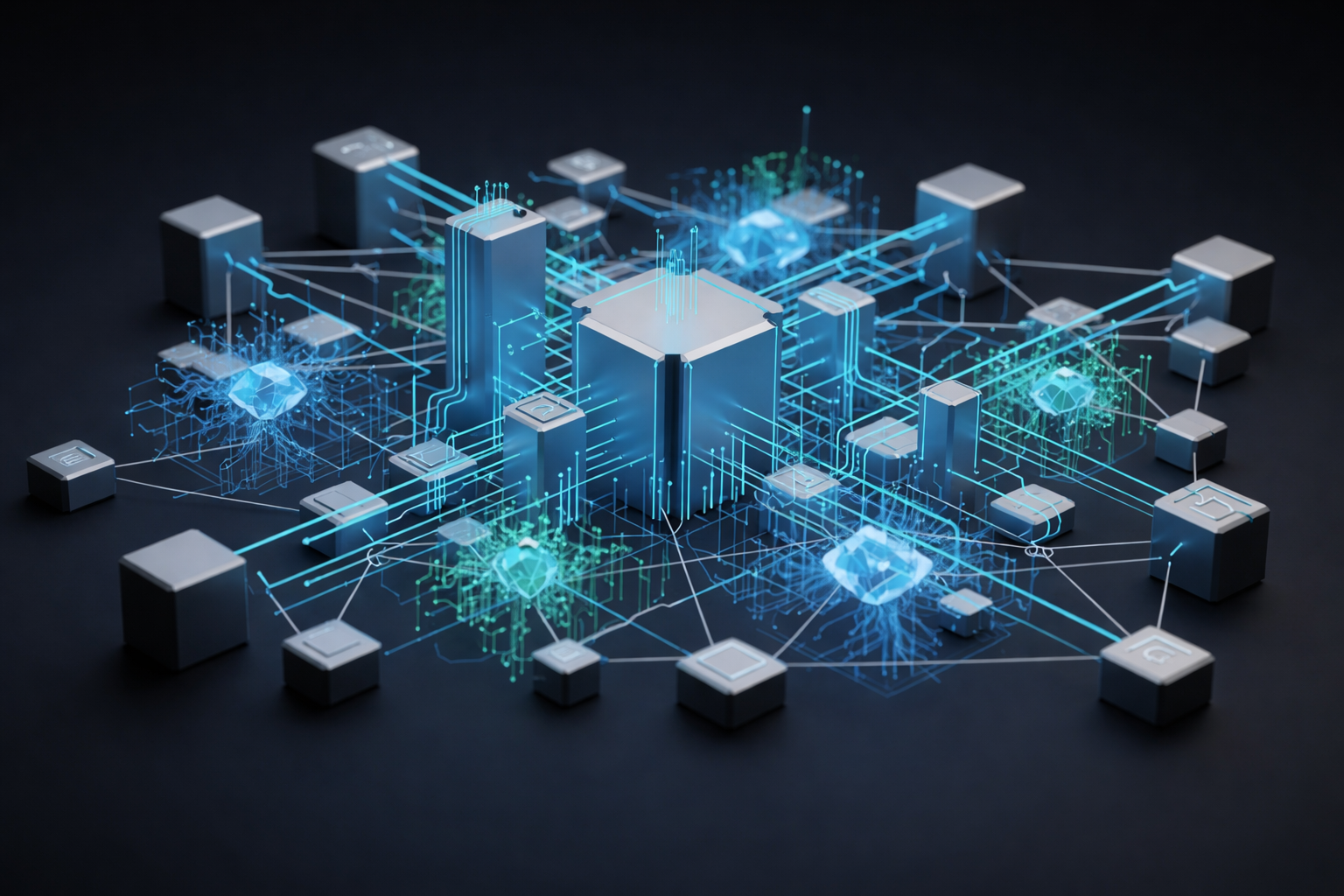
Most IoT projects don’t start with devices or platforms. They start with a question: “Will this actually work at scale?”
Connecting 50 devices is easy. Connecting 50,000 means infrastructure, architecture, and responsibility.
Where IoT networks fail:
- unstable connectivity between devices;
- data loss;
- lack of scalability;
- no centralized control;
- delayed system response.
We Don’t Start with Devices
The most common mistake is treating IoT as “just connecting sensors.”
We start with different questions:
- how data will be transmitted;
- what happens during failures;
- how the system behaves under growth;
- who controls the entire network.
This is not about devices — it’s about systems.
Connectivity Is the Foundation
IoT networks rely entirely on connectivity. And connectivity is always unreliable.
- LoRaWAN;
- NB-IoT;
- LTE / 5G;
- Wi-Fi.
We design systems that continue working even when connections fail.
Architecture: Divide to Control
The system is split into layers:
- devices;
- network layer;
- data processing;
- management platform.
This allows isolation of failures and scalability.
Working with Data
IoT is a stream of events.
- collection;
- processing;
- analysis;
- reaction.
If any step fails — the system loses its value.
Network Management
IoT is not only about receiving data — it’s about control.
- device updates;
- remote control;
- status monitoring.
Without this, the network becomes uncontrollable.
Fault Tolerance
The network must continue operating under failure conditions.
- redundant communication channels;
- data buffering;
- retry mechanisms.
Otherwise, you lose both data and trust.
Technology Stack
- MQTT / Kafka — data exchange;
- Node.js — backend;
- Microservices — scalability;
- PostgreSQL / Time-series — storage;
- Docker / Kubernetes — infrastructure.
Business and City Impact
- infrastructure control;
- cost reduction;
- real-time operations;
- scalability.
IoT networks are not about sensors. They are about controlling reality in real time.
Need an IoT Network?
We build systems that remain stable under growth and high load.