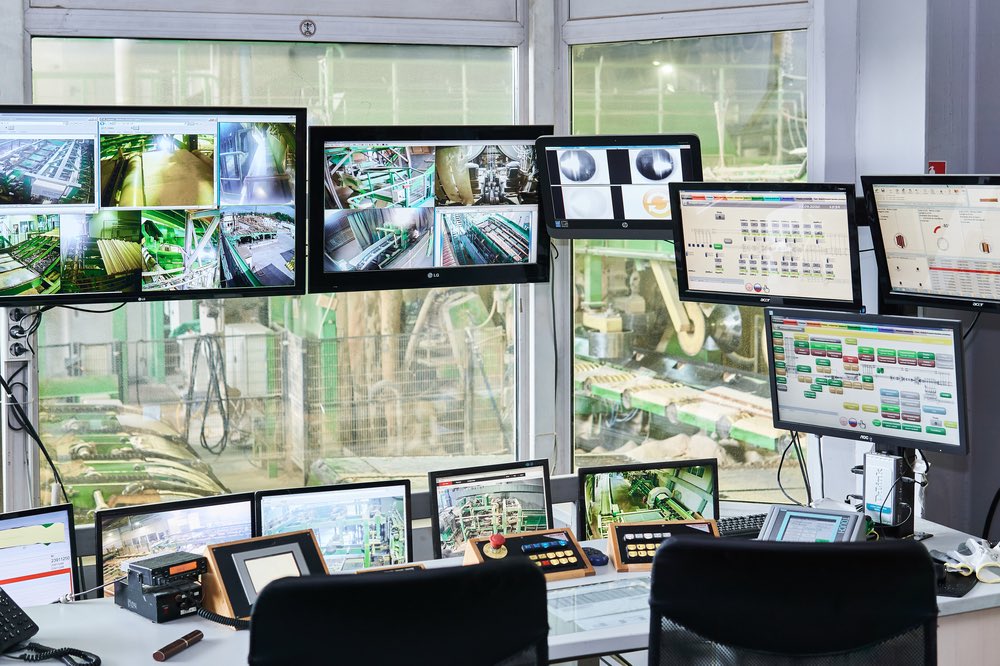
Industrial automation is increasingly viewed as an IT task. However, unlike corporate systems, the cost of failure here is significantly higher — production downtime, process disruption, or equipment damage.
At OneDev, we have worked with real industrial facilities and engineering infrastructure. In practice, such systems are not developed as typical software products, but as reliable digital environments that must operate continuously for many years.
Below is a practical perspective on industrial automation from the standpoint of an IT team involved in real-world implementations.
Industrial Automation in the IT Context
Traditionally, automation is associated with controllers, sensors, and production lines. In the IT context, it means building a digital monitoring and control layer on top of physical equipment.
The key functions of this layer include:
- • collecting data from equipment and sensors
- • visualizing industrial processes
- • real-time parameter monitoring
- • alerting on failures and deviations
- • storing historical data and enabling analytics
This creates a unified operational view of the entire facility — from individual devices to the full production site.
How SCADA and Monitoring Systems Work in Practice
In a production environment, SCADA is not a demonstration dashboard. It is a daily working tool for operators and engineers.
A typical system includes:
- • process diagrams (mimic panels)
- • real-time equipment data
- • event and alarm logs
- • threshold-based alerting
- • historical process data storage
Key operational requirements:
- • stable 24/7 operation
- • minimal data latency
- • clear and functional interface
- • redundancy and fault tolerance
In real environments, reliability and predictability are far more important than visual design.
Integration with Equipment and Sensors
The main challenge in industrial automation is not interface development, but integration with physical devices.
In practice, projects involve:
- • PLCs from different manufacturers
- • sensors and actuators
- • industrial protocols (Modbus, OPC, MQTT, etc.)
- • legacy equipment with limited documentation
- • unstable or low-bandwidth communication channels
Typical integration tasks include:
- • developing drivers and gateways
- • buffering data during communication outages
- • filtering and normalizing signals
- • time synchronization and event alignment
A significant portion of the project is carried out at the intersection of IT and industrial environments.
Why These Systems Cannot Be Built Quickly
Industrial projects are constrained by operational and technological limitations:
- • production cannot be stopped for testing
- • changes must follow strict operational procedures
- • every integration must be verified for safety
- • equipment may be decades old and have technical constraints
Implementation is usually performed in stages:
- • facility assessment
- • pilot deployment
- • gradual scaling
- • trial operation
In industrial environments, reliability always takes priority over speed.
Common Mistakes by Customers and Contractors
Trying to implement everything at once
• Lack of phased deployment increases risks and complicates commissioning.
Underestimating integration complexity
• The main effort lies in working with equipment, not building interfaces.
Focusing on visualization instead of reliability
• Well-designed dashboards cannot compensate for unstable data collection.
Lack of long-term architecture
• Systems must support future expansion and equipment modernization.
Why Automation Is Infrastructure, Not a Short-Term Project
In practice, such systems become:
- • a unified enterprise data layer
- • an operational platform for industrial processes
- • a foundation for analytics and optimization
- • a part of critical production infrastructure
User interfaces may change. Architecture and reliability must remain stable.
Key Practical Conclusions
- • The main challenge is equipment integration
- • Reliability is more important than implementation speed
- • Projects should be delivered in phases
- • Systems must operate 24/7
- • Architecture should be designed for long-term operation