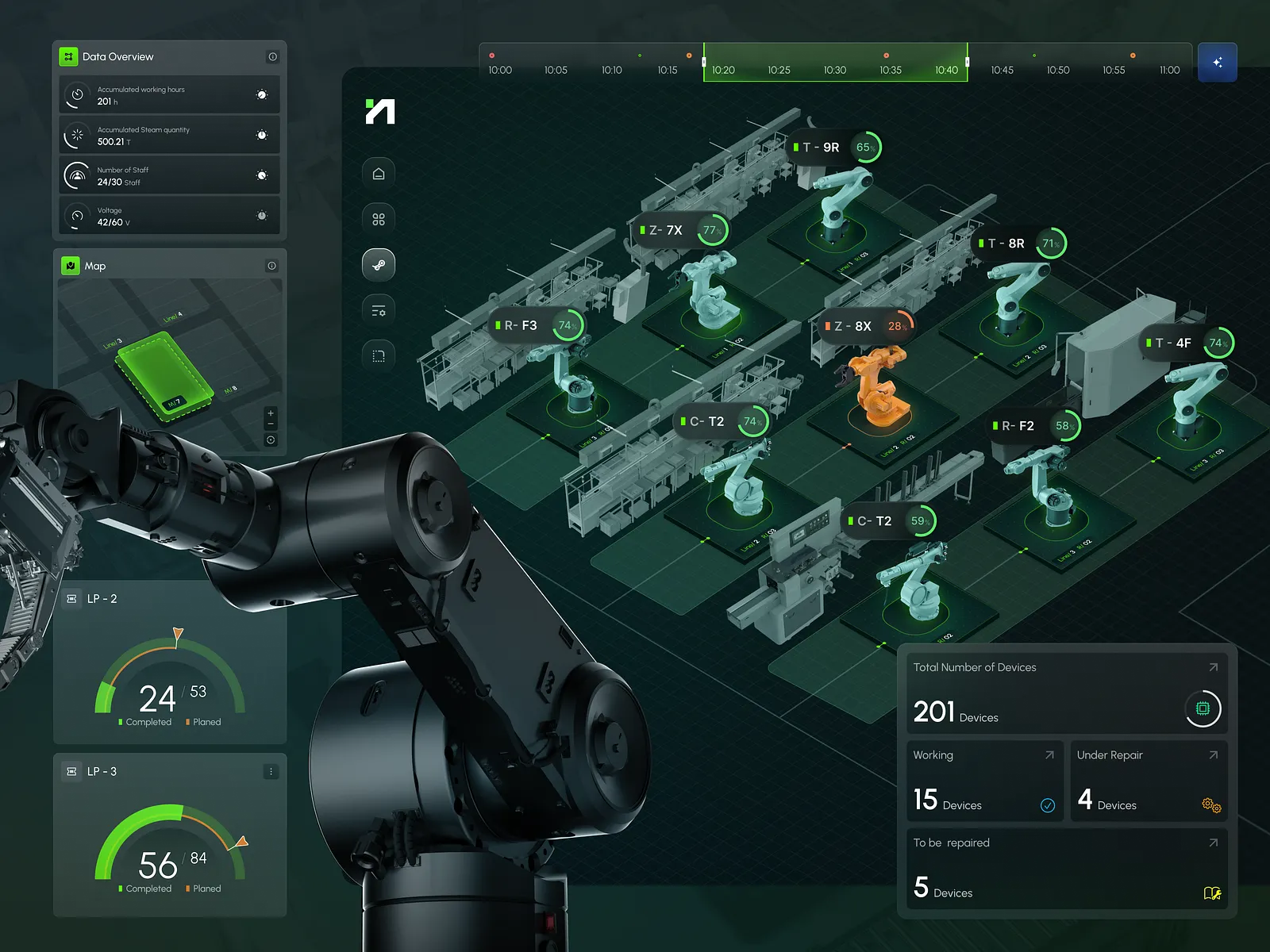
From the outside, an IoT platform looks simple: devices send data, the system processes it, and users see results. Inside, however, it’s not a single system — it’s a chain of tightly connected components operating in real time.
If even one part of this chain becomes unstable, the entire system starts to fail: data gets lost, commands don’t reach devices, and operations become unreliable.
What happens with weak architecture:
- data transmission delays;
- message loss;
- unstable device behavior;
- lack of scalability;
- increasing system load.
Where IoT Systems Actually Begin
An IoT platform doesn’t start with an interface — it starts with devices.
- sensors;
- controllers;
- embedded systems.
They generate data, but without infrastructure, that data has no value.
Data Transmission: The First Risk Layer
Devices constantly send data, but network conditions are never perfect.
- connection drops;
- latency;
- packet loss.
A reliable system must handle these conditions without failure.
Processing Layer: Where Value Is Created
Raw data has no meaning until it is processed.
- filtering;
- aggregation;
- analysis.
This is where business logic lives.
Real-Time Response
IoT is not only about collecting data — it’s about reacting instantly.
- device control;
- parameter changes;
- process automation.
Delays here can break entire workflows.
Data Storage
IoT systems generate massive volumes of data.
- time-series data;
- logs;
- events.
Storage must be both scalable and fast.
User Interface and Control
Users only see the top layer:
- dashboards;
- analytics;
- device control panels.
Behind it is a complex architecture working in real time.
Why IoT Systems Fail
- lack of architecture;
- no error handling;
- no scalability;
- no monitoring.
These issues lead to instability over time.
What Proper Architecture Looks Like
- layered system design;
- message queues;
- asynchronous processing;
- scalable services.
Technologies Behind IoT Platforms
- Node.js (NestJS);
- Microservices;
- PostgreSQL;
- Redis;
- Kafka / MQTT;
- Docker / Kubernetes.
Business Impact
- stable operations;
- full device control;
- scalability;
- real-time responsiveness.
IoT is not about devices. It’s about the architecture that controls them.
Need an IoT Platform?
We design systems that operate reliably in real time and scale without limits.